The project does not become easy to own simply because the panels are on the roof. A useful handover connects the final installed system to its approvals, monitoring and service plan. Ask for those records in the quote so they are deliverables rather than items to chase afterwards.
Close the approvals loop
Collect the relevant inspection outcomes, correction records and distributor correspondence establishing the permitted operating steps. Compare the final installed equipment with the approved drawings. If the system changed during construction, request the revised as-built documents.
Do not treat a generation graph as proof that every approval is complete. Ask the contractor to explain the closeout state and any condition that remains. Keep the municipal and distributor records together but distinguish their purposes.
Make monitoring access yours
Confirm the account owner, login process and who else has access. Ask whether subscriptions or communication hardware are needed and what happens if the installer stops providing service. Record where system alerts arrive and how to update those contacts.
Understand which figure the monitoring screen shows: inverter production, household use, exports or another measured/modelled value. Not every platform measures the same quantities. Compare its documented functions with what the quote promised rather than assuming every screen is a complete utility-bill meter.
Keep the equipment and roof record
Retain module and inverter models, serial records, layout, single-line diagram and attachment/weatherproofing details. Keep manufacturer warranty documents, workmanship terms and the service contact together. If a roof trade needs access later, those records help identify the installation and the removal/reinstall responsibilities.
Photographs taken during construction can be useful where they document the agreed scope. Request records appropriate to the project without asking the homeowner to access electrical equipment or climb to inspect concealed details.
Know what an alert should trigger
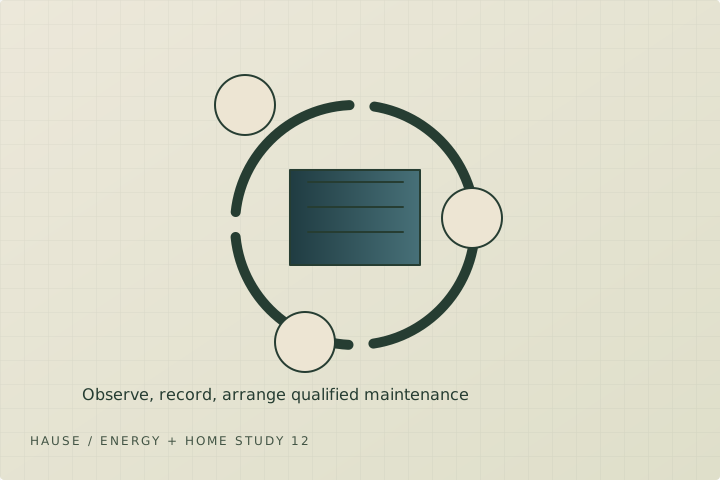
Ask which alerts can indicate a communications issue and which require service. Define the response contact and the method for sharing screenshots or production history. A low-output day may have a different explanation from a repeated equipment fault; use the monitoring context before concluding the entire system is failing.
A hypothetical owner planning to sell the home can assemble the same records for the buyer: equipment, approvals, monitoring transfer, warranty terms and any financing obligation. Good ownership records reduce uncertainty without promising a resale premium.
| Handover record | Why it matters |
|---|---|
| Approvals and corrections | Establish the actual closeout state |
| As-built design | Show what was installed and changed |
| Monitoring ownership | Keep access and alerts under the owner's control |
| Equipment/warranty package | Support troubleshooting and claims |
| Service and maintenance instructions | Provide a clear response path |
Sources + further reading
- City of Calgary: Residential solar collectors
- City of Calgary: Solar photovoltaic permit checklist
- ENMAX Power: Connect a micro-generator
- Alberta Utilities Commission: Rule 024
- Alberta Utilities Commission: Micro-generation FAQs
- Alberta Utilities Consumer Advocate: Micro-generation
- Natural Resources Canada: Solar photovoltaic energy tools
- City of Calgary: Residential solar calculator
- Natural Resources Canada: Closed Canada Greener Homes Grant
- Natural Resources Canada: Closed Canada Greener Homes Loan
- City of Calgary: Residential Clean Energy Improvement Program
- Natural Resources Canada: Planning and decision guide for solar PV systems
Source review: 2026-10-04. Requirements and programs can change; confirm the current details with the authority or provider.