A transparent calculator is valuable because it lets you change an assumption and see the consequence. It is less useful when it turns a postal code into a confident promise. This planning model uses entered system capacity and annual yield; it does not measure your roof or select a code-compliant system.
Separate power capacity from energy
Module wattage is a power rating. Multiply the number of modules by their rated watts and divide by 1,000 to express the array's DC nameplate capacity in kW. Electricity consumption and production over time are energy quantities, expressed in kWh. Keeping those units separate prevents a common comparison error.
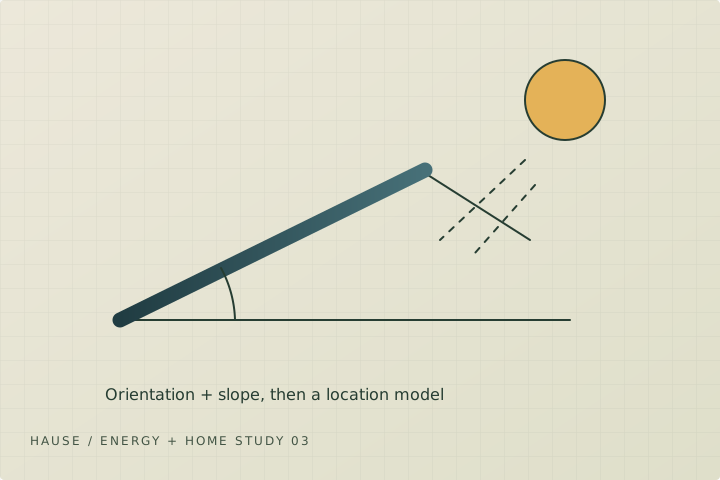
Natural Resources Canada's PV maps express potential as kWh per kWp for defined locations and orientations. Multiplying installed DC capacity by an appropriate annual yield produces an early annual-energy estimate. Our tool uses the yield you enter; the placeholder is an illustrative scenario value, not a measured Calgary roof result.
| Hypothetical input | Interpretation |
|---|---|
| 20 modules × 425 W | 8.5 kW DC nameplate capacity |
| 1,100 kWh per kW per year | An illustrative user-editable final yield |
| 8.5 × 1,100 | 9,350 kWh of modelled annual generation |
| 10,000 kWh household use | 93.5% annual energy equivalence; not 93.5% bill reduction |
Keep losses inside one declared assumption
The entered annual yield is intended to represent a final generation estimate after the modeller has considered orientation, tilt, shading, equipment and losses. Do not apply a second blanket loss factor to a yield that already includes those effects. Ask the proposal author what is included and keep that answer with the scenario.
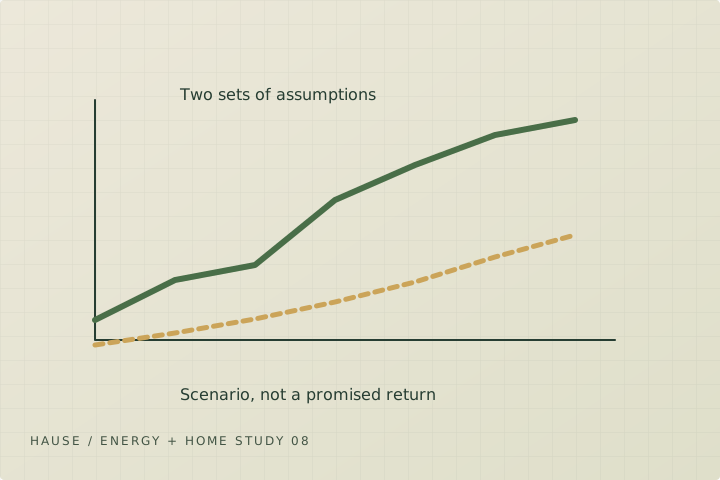
A default scenario cannot know your snow retention, tree growth, inverter loading, roof obstructions or downtime. Compare a conservative yield with the proposed base case. A narrower-looking output is not more accurate unless the underlying inputs are better supported.
Annual production does not specify timing
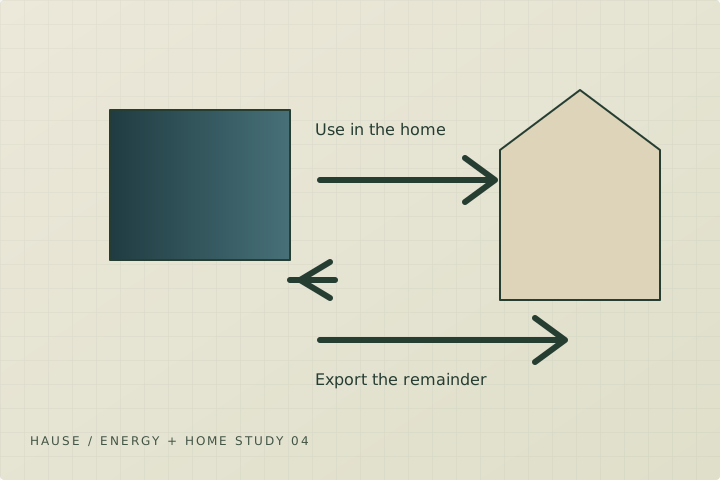
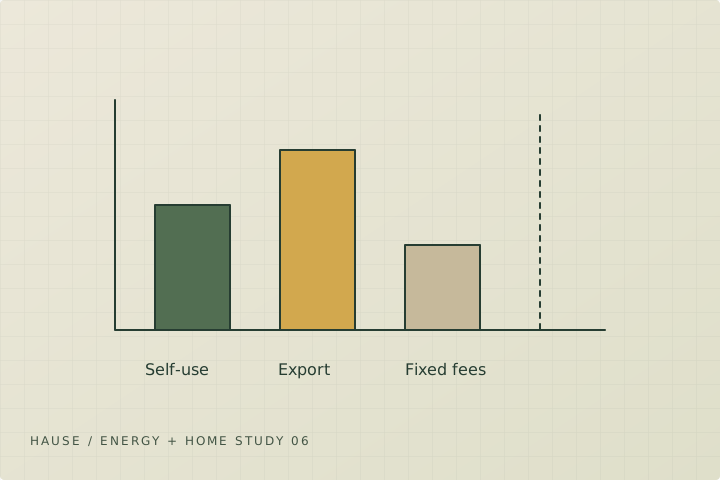
A household can generate an amount of electricity similar to its annual use and still buy energy during dark hours or low-production periods. The model therefore asks separately what fraction of generated energy is used on site. The remaining generated energy is treated as an export in the simple value calculation.
The City of Calgary's map calculator provides an address-based starting point and calls for professional review. It also states that changes after its underlying LiDAR collection may be absent. Use a map as a screening aid, then confirm the current roof and detailed system design.
Turn the output into an editable brief
Keep the panel count, wattage, yield, annual use and value assumptions with the output. When requesting a site review, identify which values came from bills, an installer design or an illustrative guess. That distinction makes the next calculation useful: a professional can replace assumptions with property-specific evidence instead of starting from an unexplained savings number.
Sources + further reading
- Natural Resources Canada: Solar photovoltaic energy tools
- City of Calgary: Residential solar calculator
Source review: 2026-10-04. Requirements and programs can change; confirm the current details with the authority or provider.